Nitrous-Oxide Sedation System
Model: MCD0213
Product Overview
Nitrous-oxide sedation systems, commonly known as dental sedation equipment, really take the edge off dental visits, especially if patients get anxious in the chair. They mix nitrous oxide and oxygen, so patients can chill out but stay awake the whole time. The dentist tweaks the gas levels as needed, and safety features built into the machine keep everything in check. Patients end up feeling more at ease and are usually easier to work with, whether it’s just a quick filling or something more complicated.

Key Features & Advantages
1. Pneumatic Control Technology
This nitrous-oxide sedation system adopts pneumatic control technology, requiring no electrical power supply.
2. One-handed Flow Rate Adjustment Knob
The gas flow control valve is designed with a one-handed gas flow rate adjustment knob, which is quick and accurate.
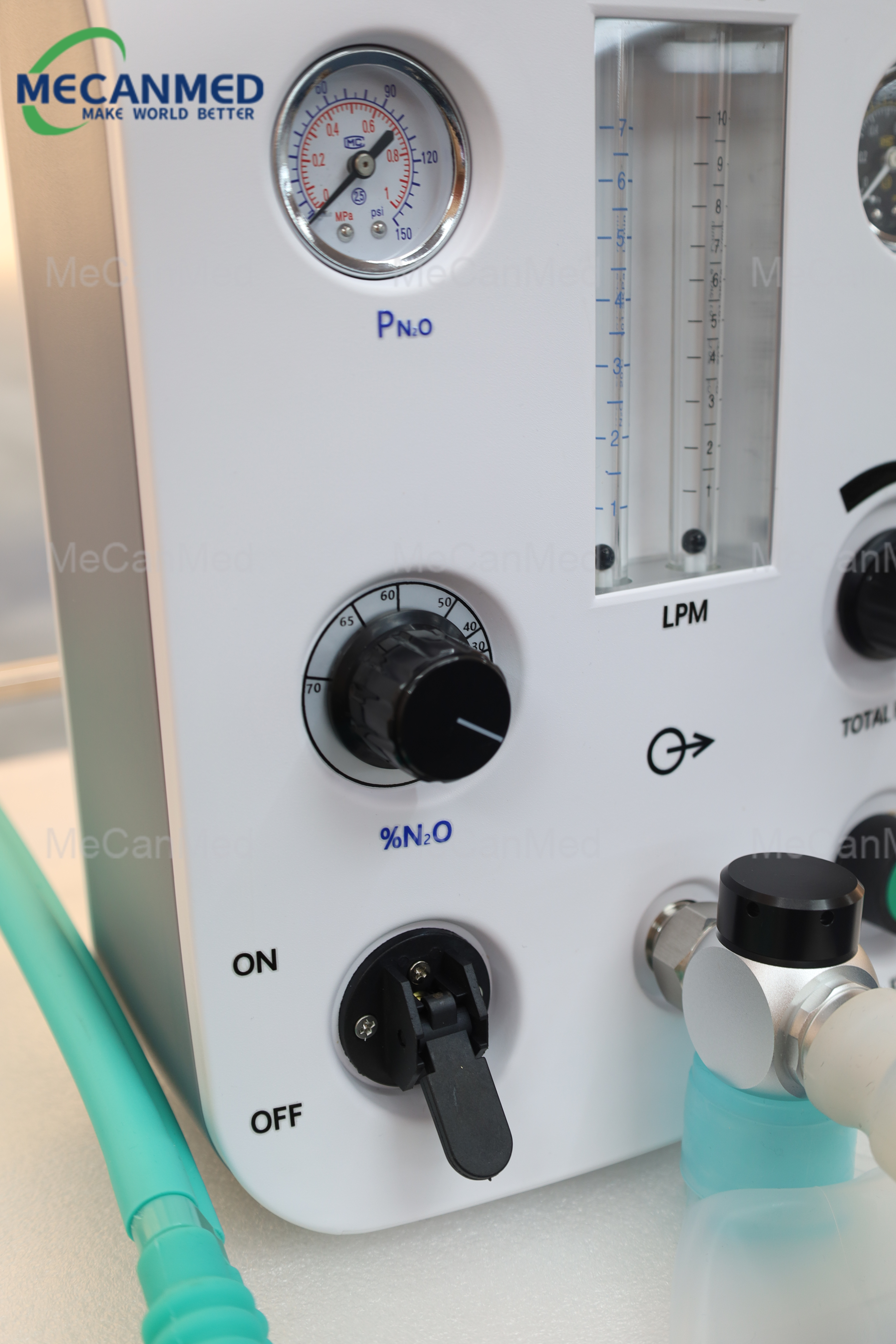
3. Precise Gas Concentration Control
This pneumatic sedation system is equipped with a dedicated flow control valve for precise adjustment of nitrous oxide concentration (0–70%) and oxygen concentration (30%–100%). It is safe and reliable, featuring a rapid oxygen replenishment device to quickly restore the oxygen proportion within the mixed gas circuit.
4. Constant Gas Ratio Maintenance
This dental sedation equipment maintains a constant nitrous oxide-to-oxygen ratio when adjusting gas flow.
5. T-type Safety Valve
This pneumatic sedation system includes a T-type safety valve. If something goes wrong — say, the gas supply cuts out — the valve opens up automatically. The patient can breath regular room air, so there’s no risk of suffocation.
6. Universal Mask Compatibility
Compatible with various specifications of nasal/face masks, suitable for different user groups.
Precise Nitrous Oxide Concentration Control
Precise Nitrous Oxide Concentration Control
Nitrous Oxide-to-Oxygen Ratio Control Area
T-type Safety Valve
Key Specifications
Model | MCD0213 |
N2O Adjustment Range | 0-70% |
O2 Adjustment Range | 30%-100% |
Maximum Total Flow Rate | 17L/min |
Flow Accuracy: Minimum | 0.5L/min |
Rated Working Pressure | 0.45MPa ± 10% |
Application Scenarios
Here’s where you’ll see these systems in action:
1. General Dental Clinics
Great for regular stuff like fillings or tooth extractions, especially if people get nervous.
2. Pediatric Dentistry
Kids can freak out at the dentist. This helps them relax, so the treatment goes smoother.
3. Oral Surgery Departments
Bigger procedures — like pulling wisdom teeth or putting in implants — don’t have to be stressful. Patients stay calm from start to finish.
4. Special Needs Dentistry
These systems make dental care possible for people with physical, cognitive, or behavioral challenges.
5. Dental Phobia Management
They’re a lifesaver for anyone terrified of dental work, letting dentists ease them in gradually.
FAQ
Q1: What happens if the power cuts out during a procedure?
A1: Don’t worry. This nitrous-oxide sedation system doesn’t rely on electricity; it works on air pressure alone. Even if the power goes out, it keeps running. And if the gas flow stops for any reason, a safety valve automatically lets the patient breathe room air. There’s no risk of running out of oxygen.
Q2: Can it work for both kids and adults?
A2: Definitely. You can adjust the flow rate anywhere from 0 up to 17 liters per minute, and there are masks for everyone — toddlers to adults.
Q3: What about maintenance? Does it slow things down?
A3: Not really. Since there aren’t any electrical parts, upkeep means checking the gas lines and sterilizing the masks. The modular design makes swapping out parts quick and easy, so clinics usually handle these checks as part of their daily routine, with no real impact on the schedule.