Product Overview
The ultrasonic wound debridement device is designed to support clinical wound cleaning and debridement through ultrasonic cavitation and high-frequency vibration. It helps medical staff remove necrotic tissue, contaminated materials and wound exudate more efficiently than basic manual cleaning methods.
Depending on the model, the system can integrate ultrasonic debridement, pulse flushing and vacuum suction in one device. It is suitable for trauma surgery, burn departments, orthopedics, emergency surgery, general surgery, dermatology, wound dressing rooms and operating rooms.
Why Hospitals Use Ultrasonic Debridement
1. More Controlled Wound Cleaning
Ultrasonic energy helps loosen and remove necrotic tissue and contamination from the wound surface, supporting a more controlled debridement process.
2. Less Interference with Normal Tissue
Compared with aggressive manual debridement, ultrasonic debridement is designed to reduce unnecessary irritation to surrounding normal tissue during wound cleaning.
3. Better Workflow for Complex Wounds
Pulse flushing and vacuum suction options help medical staff clean the wound, remove fluid and maintain a clearer treatment field during procedures.
4. Suitable for Multi-Department Use
One device can support wound care needs across trauma, burn, orthopedic, emergency, surgical and dressing room departments.

Ultrasonic Flushing
Normal Flushing
Key Clinical Applications
| Application Are | Suitable Wound Types |
Trauma & Emergency Care | Contaminated soft tissue injury, traumatic wound, first-aid debridement |
Burn & Scald Treatment
| Burn wounds, scald wounds, superficial infected wounds |
Chronic Wound Care | Diabetic wounds, bedsores, neurotrophic ulcers, traumatic ulcers |
Surgical & Orthopedic Wounds | Post-surgical wounds, joint replacement wounds, fracture fixation wounds |
Sinus / Fistula Wounds | Sinus tract, fistulous tract and deeper wound channel |
Dressing Room Use | Routine wound cleaning and dressing preparation |
Model Options
Model | Function Configuration | Recommended Use |
MCS3685-C1 | Ultrasonic debridement + pulse flushing + vacuum suction | Complete wound cleaning configuration |
MCS3685-C2 | Ultrasonic debridement + pulse flushing | Cleaning-focused configuration |
MCS3685-C3 | Ultrasonic debridement + vacuum suction | Debridement with suction support |
MCS3685-C4 | Ultrasonic debridement | Basic ultrasonic debridement configuration |
Technical Specifications
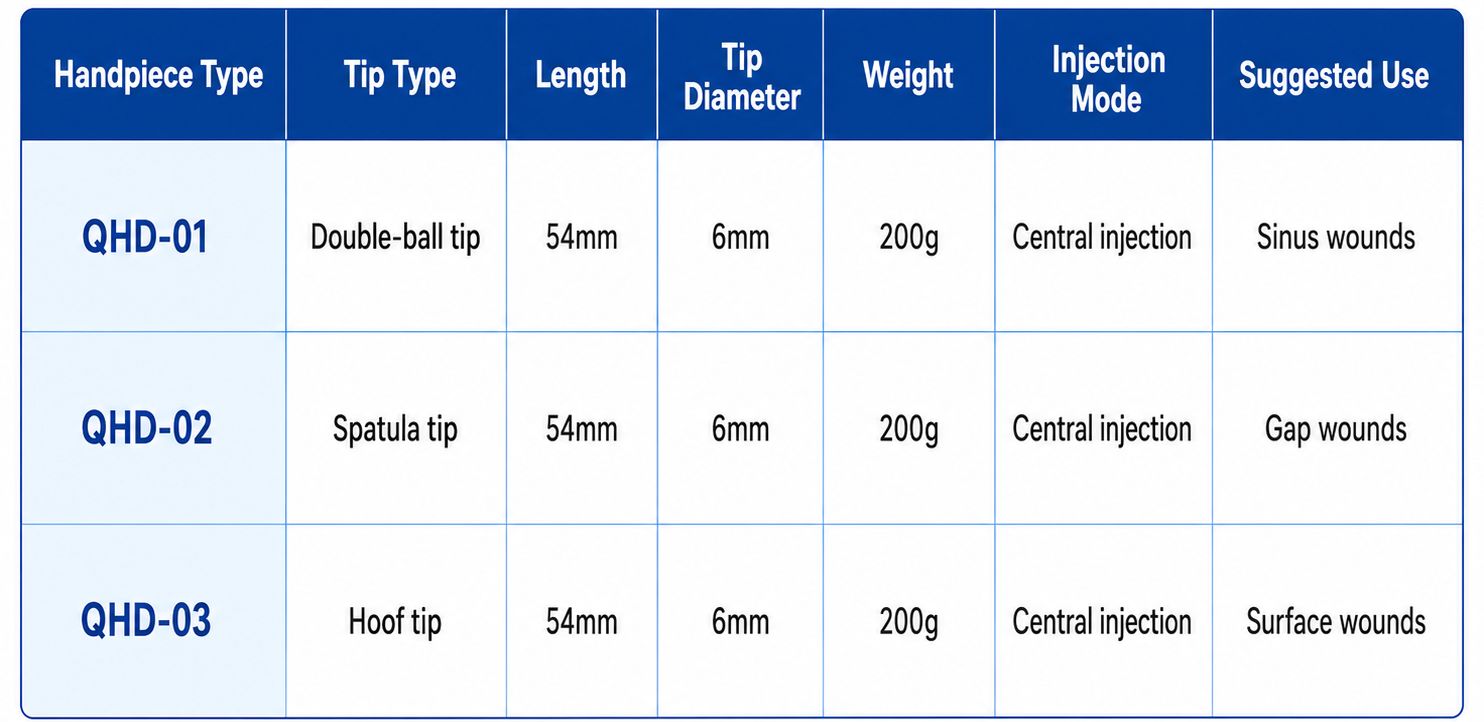
Handpiece Options
Product Structure Highlights
Interface for ultrasonic handpiece and pedal switch
Pressure gauge and regulating valve
Peristaltic pump controller
Liquid medicine holder mounting port
Power supply and switch
Mobile trolley base for flexible clinical movement
Why Choose MeCanMed
MeCanMed supports hospitals, clinics, distributors and medical project buyers with product selection, quotation, delivery coordination and after-sales communication.
For wound care equipment procurement, we can help buyers compare model configurations, confirm department usage, prepare technical information and select suitable accessories based on clinical application needs.
FAQ
1. What is an ultrasonic wound debridement device used for?
Q1: It is used for wound cleaning and debridement in clinical departments. It can support infected wounds, traumatic wounds, diabetic wounds, burn wounds, post-surgical wounds and chronic wounds, depending on the clinical requirement.
2. Which model is the most complete configuration?
Q2: CF/Q-C1 is the most complete configuration because it includes ultrasonic debridement, pulse flushing and vacuum suction. It is suitable for buyers who need a more comprehensive wound cleaning system.
3. What is the difference between CF/Q-C2 and CF/Q-C3?
Q3: CF/Q-C2 includes ultrasonic debridement and pulse flushing, while CF/Q-C3 includes ultrasonic debridement and vacuum suction. The choice depends on whether the department needs flushing support or suction support during debridement.
4. What handpiece tip should be selected?
Q4: The double-ball tip is suggested for sinus wounds, the spatula tip is suggested for gap wounds, and the hoof tip is suggested for surface wounds. The final selection should follow clinical operation needs.
Can MeCanMed support distributor or hospital project procurement?
Yes. Please provide the required model, quantity, destination country, intended department and purchase timeline. MeCanMed can help with model recommendation and quotation support.
Need an Ultrasonic Wound Debridement Device for Your Hospital or Distribution Business?
Contact MeCanMed to get model recommendations, technical specifications and quotation support. Tell us your required configuration, quantity, destination country and target department, and our team will help you confirm the suitable model.